
Lisa
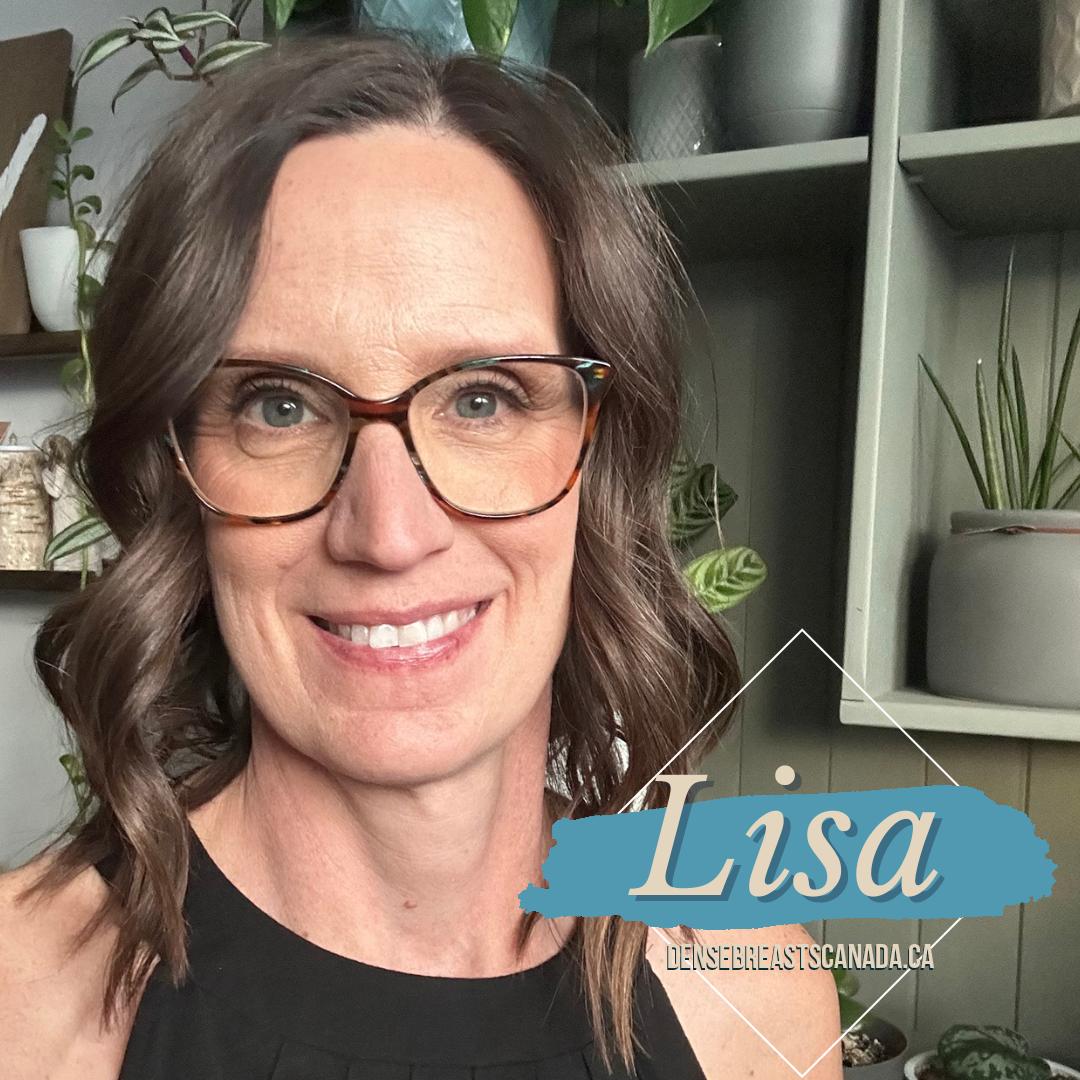
My name is Lisa Vick. I’m a wife, a mom to two amazing young adults, and a proud fur-mom to our four-legged baby. We live a peaceful life on the prairies in Weyburn, Saskatchewan. I’ve always felt a strong connection to my community and have spent many years staying busy giving back, volunteering, and staying involved in my kid’s activities.
In September 2024, at 48 years old, I was getting ready to head back to work as an Educational Assistant when I found a lump by accident. I wasn’t doing regular self-exams because I believed they weren’t necessary until at least 50 based on the 2024 guidelines from the Canadian Task Force on Preventive Health Care. I was healthy, active five days a week, and had no family history of breast cancer. It wasn’t even on my radar.
What I didn’t know was that I had extremely dense breasts — something that should have put me on high alert. Something I didn’t even know was a thing until a radiologist informed me during my biopsy.
I let the lump sit for a few weeks before calling my GP. Like much of Canada facing doctor shortages, I had to wait to be seen. Even if I had wanted to begin screening prior to finding a lump, I would not have qualified as at the time in Saskatchewan, self-referral wasn’t even allowed until age 50. Thankfully, that age has since been lowered to 43 and will drop to 40 by June 2026 — but at the time, I didn’t qualify.
Then the waiting continued.
I waited two months for a diagnostic mammogram. Then another six weeks for a biopsy. Because my case was categorized as highly suspicious it was considered urgent, yet Saskatchewan’s waitlist had no clear timeline. I ultimately chose to travel out of province for my biopsy. My next hurdle was finding a surgeon during a breast surgeon shortage.
To make things harder, my GP was not supportive. I found myself advocating alone and navigating the system without proper follow-up. I finally received a diagnosis of Invasive Ductal Carcinoma and Ductal Carcinoma In Situ. Because of my extreme density and multiple cysts found during my biopsy on my ‘healthy breast’, I chose to have a double mastectomy to aesthetic flat closure, as I did not want to deal with long wait times again. No woman in a vulnerable position should ever have to do that. Thankfully, I found a wonderful surgeon, oncologist, and Nurse Practitioner that have all given me exceptional care throughout the remainder of my journey.
But something powerful came out of my diagnostic experience.
During the long waits and uncertainty, I made a promise to myself: when I was healthy enough, I would create a support group to help other women navigate the system, offer peer support through shared experiences, and be a voice for those who needed one.
In June 2024, WeyStrong was born.
In December 2025, WeyStrong became a registered non-profit. What started as a promise during one of the hardest seasons of my life has grown into something that is helping women, not only in Weyburn, but across southeast Saskatchewan who have ever received any type of cancer diagnosis.
I am blessed to have five incredible women who believed in my vision. Together, we host retreats, Coffee & Connection gatherings, and fundraisers like our Bunco Night to help offset the cost of survivor programming. We are building community, connection, and strength — because no woman should feel alone while navigating cancer.
Every cancer experience is different. For me, words like “battle,” “warrior,” and even “survivor” don’t quite fit. My cancer was a bump in the road — an unexpected curve. I prefer the word thriver and have a tiny tattoo to remind myself. Today, I’m grateful to say I’m back on track, and I like where I’m headed and happy to say that March 5th, marks 2 years of remission.
I never once asked, “Why me?”
My thought was, “Why not me?”
Cancer does not discriminate.
From the beginning, I have been vocal — not just for myself, but for the women who are scared, stuck in long wait times, misdirected files, inadequate follow-through, and falling through the cracks of an overwhelmed healthcare system. I reached out to media, my MLA, the Saskatchewan Minister of Health, and other advocates — not simply to criticize, but because I genuinely wanted to know how to help make it better.
Advocacy became part of my healing.
Jennie Dale has also been a driving force behind my advocacy. We’ve done a little media work together, and she continues to encourage me to raise my voice provincially. I will continue to do just that, because early detection is key to better outcomes and reduced treatments.
If I could leave women with one piece of advice, it would be this:
Know your breasts.
Know your breast density.
Trust your instincts.
Push for answers.
And please, trust medical experts when it comes to the safety of mammograms. Misinformation on social media is dangerous — and your life could depend on accurate information.
This is my story. If sharing it helps even one woman trust her instincts, advocate sooner, or feel less alone, then it’s worth it. Because no woman should have to fight the system while facing cancer. And no woman should ever feel alone.